Oliver Rodriguez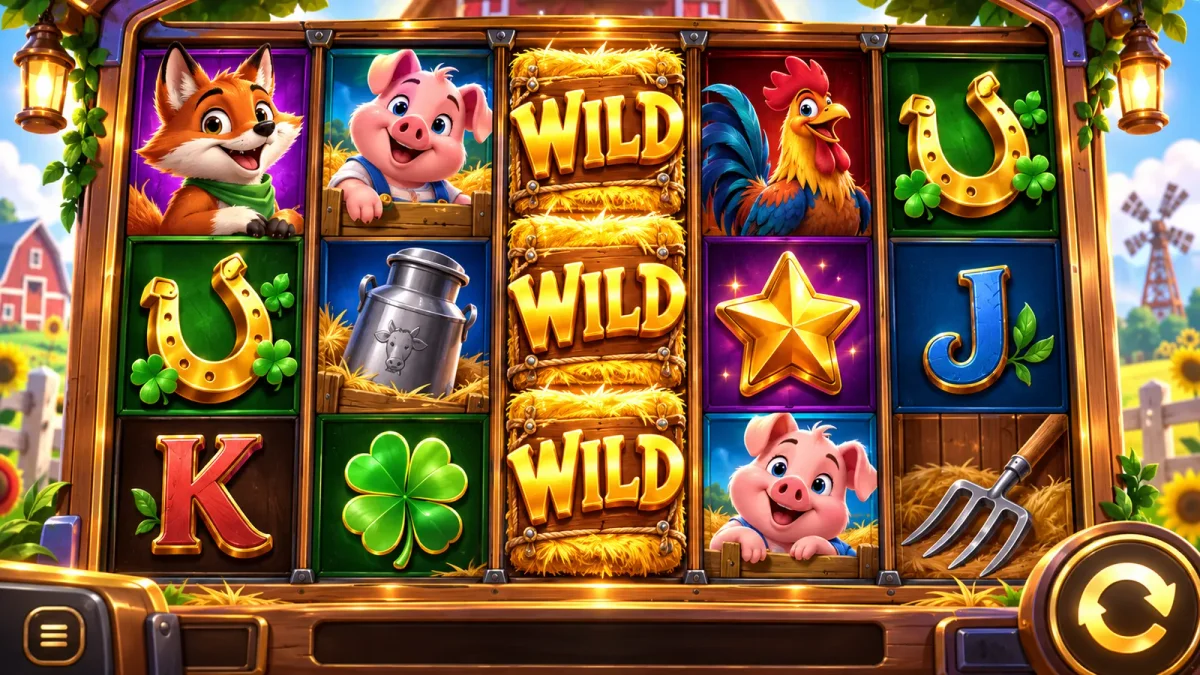
A Wild symbol is a special slot symbol that can substitute for certain other symbols to help form a qualifying winning combination. Its basic role is comparable to a joker in some card games, although exactly which symbols a Wild can replace depends on the rules of the individual slot.
Modern Wild symbols can do considerably more than simple substitution. Depending on the game, a Wild may expand across an entire reel, remain locked in position, move between reels, carry a multiplier, clone itself or trigger a respin.
That makes the question "what is a Wild symbol?" more complicated than it initially appears. The Wild icon itself does not tell you how the feature behaves – the individual game's rules determine what a Wild replaces and what additional functions it has.
Casino Critic explains these mechanics for informational purposes. Wild features can change how a slot produces qualifying combinations, but they do not guarantee winnings or remove the mathematical house advantage.
What Does a Wild Symbol Do?
A Wild symbol usually substitutes for regular paying symbols when doing so creates or improves a qualifying combination. For example, if a payline contains two matching high-value symbols followed by a Wild, the Wild may substitute for the missing third matching symbol if the game's paytable allows that combination.
However, Wilds usually have restrictions. In many slots, they do not substitute for Scatter, Bonus, Jackpot or other special symbols.
A simplified example looks like this:
| Reel 1 | Reel 2 | Reel 3 | Result |
|---|---|---|---|
| A | A | A | Three matching symbols |
| A | A | Wild | Wild substitutes for A |
| K | Wild | K | Wild substitutes for K |
| A | A | Scatter | Depends on game rules |
The important phrase is "depends on game rules." There is no universal rule requiring every Wild to replace every other symbol.
Some Wilds can also produce payouts of their own. Others exist purely as substitutes or feature symbols.
How Does a Wild Symbol Work in Slots?
When the reels stop, the game's mathematical system evaluates the resulting symbols according to its paytable and win rules. If a Wild occupies an eligible position, the game can treat it as another symbol when that substitution creates a qualifying combination.
Consider a simple five-reel slot where three matching symbols are needed from the leftmost reel. A combination such as diamond – Wild – diamond could potentially be evaluated as three diamonds if the Wild substitutes for that symbol.
The typical process is:
- The Reels Stop. The random outcome determines the visible symbols.
- The Game Identifies Wilds. Any Wild symbols are evaluated according to their rules.
- Eligible Substitutions Are Applied. A Wild can represent another permitted paying symbol.
- Winning Combinations Are Calculated. Paylines, ways or clusters are evaluated.
- Additional Wild Features Activate. Expansion, multipliers, respins or other mechanics may occur where applicable.
More complicated slots can change this sequence. An Expanding Wild, for example, may first cover additional positions before the final combination is evaluated.
What Symbols Can a Wild Replace?
A standard Wild commonly substitutes for ordinary low- and high-paying symbols. It may therefore represent card ranks, characters, objects or other regular icons appearing in the paytable.
The most common exceptions are Scatters and Bonus symbols. These often need to land naturally because they activate Free Spins or another special feature.
Wild substitution rules can therefore be divided broadly into three groups:
- Regular Paying Symbols. Usually eligible for Wild substitution.
- Scatter Symbols. Commonly excluded.
- Bonus and Special Symbols. Frequently excluded unless the rules specifically state otherwise.
Always check the paytable or game information rather than assuming that a Wild replaces everything.
What Are the Different Types of Wild Symbols?
Wild mechanics have developed far beyond the original substitution symbol. Modern slots can use several Wild types within the same game.
| Wild Type | What It Does |
|---|---|
| Standard Wild | Substitutes for eligible paying symbols |
| Expanding Wild | Expands across additional reel or grid positions |
| Sticky Wild | Remains in position for multiple spins or respins |
| Walking Wild | Moves across the reels or grid |
| Multiplier Wild | Applies a multiplier when involved in a qualifying win |
| Stacked Wild | Appears as several vertically stacked Wild symbols |
| Spreading Wild | Creates additional Wilds in other positions |
| Random Wild | Appears or is added through a random feature |
| Colossal Wild | Occupies multiple rows and columns |
| Transforming Wild | Converts other symbols into Wilds |
These categories can overlap. A single symbol can simultaneously be an Expanding Multiplier Wild, for example.
That is why the feature description matters more than the Wild's appearance.
What Is a Standard Wild?
A Standard Wild performs the basic substitution function. It represents another eligible symbol when doing so completes or improves a winning combination.
This is the simplest form of Wild symbol and is common in traditional video slots.
A Standard Wild does not necessarily trigger any additional feature. Unless the rules specify otherwise, it may simply substitute for another symbol and disappear when the spin finishes.
Can a Standard Wild Pay on Its Own?
Sometimes. Certain slots assign the Wild its own value in the paytable, meaning several Wild symbols can form an independent winning combination.
Other games do not pay for Wild-only combinations.
The game's paytable provides the definitive answer.
What Is an Expanding Wild?
An Expanding Wild grows beyond its original position after landing. A common version expands vertically until it covers an entire reel, although grid slots can use other expansion patterns.
The expansion may happen every time the Wild lands or only when expanding would create a qualifying win.
Expanding Wilds can also interact with additional mechanics. A Wild might expand and then remain sticky, carry a multiplier or trigger a respin.
Does an Expanding Wild Always Cover a Full Reel?
No. Full-reel expansion is common but not universal.
Some games expand a Wild horizontally, in multiple directions or across a defined portion of a grid. Other Wilds grow from 1×1 into 2×2, 3×3 or larger symbols.
The term describes growth beyond the Wild's initial position, not one mandatory expansion pattern.
What Is a Sticky Wild?
A Sticky Wild remains fixed in its position for more than one game event. Sticky Wilds are especially common during Free Spins and respin features.
Instead of disappearing when the reels spin again, the Wild stays in place while some or all other symbols change.
The duration varies between slots. A Sticky Wild might remain until:
- The current respin sequence ends.
- The Free Spins feature finishes.
- A specified condition removes it.
- The Wild reaches the end of another feature cycle.
Sticky Wilds should therefore not be interpreted as permanently locked symbols. Their persistence is limited by the game's rules.
What Is a Walking Wild?
A Walking Wild moves from one position to another between spins, respins or cascades. A common implementation moves the Wild one reel to the left or right after each game event.
Some Walking Wilds continue producing respins until they leave the grid.
Others can increase a multiplier while moving. This combines spatial movement with a progressive value, making the Wild more complex than a simple substitute.
What Happens When a Walking Wild Leaves the Reels?
Usually, the Wild disappears when it moves beyond the playable grid. If the feature depends entirely on that Wild, the associated respin sequence may also finish.
Some games can introduce another Walking Wild before the original one leaves.
Again, this behaviour is game-specific.
What Is a Multiplier Wild?
A Multiplier Wild combines substitution with a multiplier. If the Wild participates in a qualifying combination, the resulting win can be multiplied by its displayed value according to the game's rules.
For example, a 3x Wild may multiply the relevant qualifying win by three.
Games handle multiple Multiplier Wilds differently. They may:
- Add multiplier values together.
- Multiply the values together.
- Apply each multiplier separately.
- Use only particular participating Wilds.
This distinction can produce very different outcomes, so the game's rules should be checked before interpreting the displayed multiplier.
What Is a Stacked Wild?
A Stacked Wild consists of several Wild symbols appearing together on the same reel. Instead of occupying one position, a stack can cover multiple consecutive positions.
If the stack fills an entire reel, it effectively creates a full Wild reel.
Stacked Wilds are particularly useful in paylines and ways-to-win games because one stack can participate in several combinations simultaneously.
They are not necessarily sticky or expanding. "Stacked" simply describes how multiple Wild positions appear together.
What Is a Spreading Wild?
A Spreading Wild creates additional Wild positions after it appears or after another defined event occurs.
For example, it may transform neighbouring symbols into Wilds or convert every instance of a selected symbol.
The spreading pattern depends entirely on the game. Some Wilds affect adjacent cells, while others can transform symbols across several reels.
A Spreading Wild can also combine with multipliers, respins or sticky behaviour.
What Is a Random Wild?
Random Wilds are introduced through a game feature rather than needing to land as ordinary reel symbols in the usual way.
The game might randomly select several positions and transform them into Wilds before a win is evaluated.
Random Wild features can operate in the base game, Free Spins or both.
The word "random" refers to how the feature selects or introduces Wild positions. It does not mean that the Wild changes the underlying randomness of future spins.
What Is a Colossal Wild?
A Colossal Wild occupies several rows and columns simultaneously. Instead of covering one cell or one reel, it can appear as a 2×2, 3×3 or even larger block.
This format is particularly useful on large grids.
A 3×3 Colossal Wild, for example, occupies nine symbol positions. If the game uses ways or clusters, those positions may participate in several qualifying combinations.
Colossal Wilds can also carry multipliers or expand further depending on the slot.
10 Real Slots With Wild Symbol Mechanics
Wild mechanics are easier to understand through actual games. The following slots use Wilds as meaningful parts of their feature systems rather than simply displaying an ordinary substitution symbol.
| Slot | Provider | Wild Mechanic |
|---|---|---|
| The Big Dog House | Pragmatic Play | Expanded, colossal, sticky and multiplier Wilds |
| Wild Skullz | Pragmatic Play | Expanding multiplier Wilds |
| Ra vs Osiris | Pragmatic Play | Expanding and walking multiplier Wilds |
| Wanted Dead or a Wild | Hacksaw Gaming | Expanding multiplier Wild reels |
| Octo Attack | Hacksaw Gaming | Wild and Wild Multiplier symbols |
| Tricky Treats | Push Gaming | Growing Wild multipliers |
| Bamboo Ways | Push Gaming | Expanding multiplier Wild |
| Godbreaker | NetEnt | Multiplying Wild symbols |
| Wild Chapo | Relax Gaming | Expanding and sticky Wild mechanics |
| Avalon Gold | ELK Studios | Expanding Wilds |
These examples demonstrate how broadly the term Wild symbol can be applied. The underlying substitution principle remains recognisable, but the additional mechanics can make two Wild-based slots behave very differently.
1. The Big Dog House – Sticky and Multiplier Wilds
Pragmatic Play's The Big Dog House uses several versions of the Wild mechanic. Wilds can appear as ordinary symbols, expanded 1×3 Wilds or colossal 3×3 symbols.
The Wilds carry 2x or 3x multipliers. During the bonus game, Wild multipliers become sticky, while Ghost Wilds add another variation to the feature.
This makes The Big Dog House a useful example of several Wild categories overlapping inside one slot.
2. Wild Skullz – Expanding Wild Multipliers
Wild Skullz uses Wilds that can expand to cover an entire reel. When an expanded Wild participates in a qualifying win, its multiplier is applied according to the game's rules.
During the bonus, the expanded Rockstar Wild begins on reel five and moves across the grid.
Its multiplier starts at 2x and can double after qualifying wins up to 512x. The game therefore combines Expanding, Walking and Multiplier Wild characteristics.
3. Ra vs Osiris – Walking Wild Multipliers
Ra vs Osiris allows Expanding Wilds to appear across the reels with multipliers reaching 1,000x.
During the bonus game, an Expanding Wild transforms into a Walking Wild Multiplier. It awards a respin and then moves one reel to the left until it leaves the grid.
This is a clear example of a Wild changing behaviour after activation rather than remaining one fixed symbol type.
4. Wanted Dead or a Wild – Multiplier Wild Reels
Hacksaw Gaming's Wanted Dead or a Wild uses its DuelReels feature to create full Wild reels with multipliers.
When multiple participating Wild reels contribute to the same qualifying combination, their multiplier values interact according to the game's rules.
The result is substantially different from a standard Wild occupying a single position. Here, one Wild event can affect an entire reel.
5. Octo Attack – Wild Multiplier Symbols
Hacksaw Gaming's Octo Attack contains both ordinary Wilds and Wild Multiplier symbols.
Standard Wilds substitute for symbols in the paytable, while Wild Multiplier symbols can carry values ranging from 1x to 10x.
The game's Tenta-Grab mechanic can also interact with Wilds, meaning Wild symbols participate in a broader cascade-based feature system.
6. Tricky Treats – Wilds That Grow Their Multipliers
Push Gaming's Tricky Treats gives its Wild symbol two roles – it acts as both a Wild and a Scatter.
Each Wild begins with a 1x multiplier. When it participates in a cluster win, its multiplier increases by +1.
A separate Wild Multiplier symbol can distribute its multiplier value to all visible Wilds before transforming into another symbol.
7. Bamboo Ways – Expanding Multiplier Wilds
Bamboo Ways from Push Gaming uses an Expanding Wild capable of covering all currently unlocked rows.
The Wild may carry a 2x, 3x or 5x multiplier.
Because the game's grid can expand, the amount of space covered by the Wild can also change as additional rows become available.
8. Godbreaker – Multipliers That Combine Multiplicatively
NetEnt's Godbreaker uses Wild symbols carrying 2x, 3x or 4x multipliers.
An important distinction is how multiple Wilds interact. When more than one qualifying Wild multiplier appears, their values can be multiplied together rather than simply added.
That shows why reading the rules is important. Two games can both contain Multiplier Wilds but calculate their combined effect differently.
9. Wild Chapo – Expanding and Sticky Wild Features
Relax Gaming's Wild Chapo combines several Wild-based systems. Expanding TNT Wilds can affect the base game, while Sticky Wild Respins keep Wilds involved across consecutive game events.
During Free Spins, stored bombs can convert into Wilds carrying multipliers based on the number of bombs associated with their positions.
Wild Chapo therefore demonstrates how Wilds can act as both substitution symbols and the foundation of a larger bonus system.
10. Avalon Gold – Expanding Wilds
ELK Studios' Avalon Gold uses Expanding Wild symbols that grow upward when the relevant payout conditions are met.
The Wild substitutes for ordinary symbols but excludes certain special symbols such as Bonus and Mystery Box icons.
This is a useful example of why Wild rules should be checked individually: even an Expanding Wild retains specific substitution restrictions.
10 Slot Providers That Use Wild Symbols
Wild symbols are not associated with one developer. They are among the most widespread mechanics in online slot design and appear in portfolios ranging from classic video-slot studios to developers specialising in highly complex features.
These 10 providers all use Wild mechanics in their slot catalogues.
| Provider | Example | Wild Type Used |
|---|---|---|
| Pragmatic Play | The Big Dog House | Sticky, colossal and multiplier Wilds |
| Play’n GO | Static Nightmare Abyssways | Expanding and moving Wilds |
| Hacksaw Gaming | Octo Attack | Multiplier Wilds |
| Push Gaming | Bamboo Ways | Expanding multiplier Wild |
| NetEnt | Godbreaker | Multiplier Wilds |
| Relax Gaming | Wild Chapo | Expanding and sticky Wilds |
| ELK Studios | DJ Wïld | Sticky and expanding Wilds |
| Big Time Gaming | Wild Portals | MegaWild and Wild multiplier |
| Yggdrasil | Incinerator | Standard Wild and Wild Pattern |
| Wazdan | Space Gem | Expanding Wild |
The variety is more important than the number of providers. Wild substitution is an established concept, but each developer can build very different mechanics around it.
Which Providers Use the Most Advanced Wild Mechanics?
Providers such as ELK Studios, Pragmatic Play, Push Gaming, Relax Gaming, Hacksaw Gaming and Big Time Gaming regularly combine Wilds with other features.
ELK's DJ Wïld, for example, combines Sticky Wilds, Expanding Wilds and a Jackpot Wild, while Big Time Gaming's Wild Portals uses a 2×2 Wild Portal capable of removing selected symbols and building a Wild multiplier.
Relax Gaming also uses persistent and transforming Wild systems in titles such as Wild Chapo and Wild Yield.
This does not make complex Wild mechanics mathematically better. It simply means the Wild performs more functions than straightforward substitution.
Wild Symbol vs Scatter – What Is the Difference?
Wild and Scatter symbols serve different purposes in most slots. A Wild typically helps form regular combinations, while a Scatter commonly contributes to a bonus trigger or pays regardless of its exact reel position.
| Feature | Wild Symbol | Scatter Symbol |
|---|---|---|
| Main Purpose | Substitutes for eligible symbols | Often triggers bonus features |
| Must Follow Payline? | Depends on win system | Often no |
| Can Trigger Free Spins? | Sometimes | Commonly |
| Can Replace Other Symbols? | Usually | Usually not |
| Can Carry Multipliers? | Yes | Sometimes |
| Can Become Sticky? | Yes | Game-dependent |
Some games deliberately blur this distinction. Tricky Treats, for example, uses a symbol that functions as both a Wild and a Scatter.
The individual paytable therefore remains more reliable than assuming every symbol follows conventional definitions.
Wild Symbol vs Bonus Symbol
A Bonus symbol is generally connected to a specific feature rather than ordinary substitution. Landing the required number can activate Free Spins, respins, a pick feature or another bonus round.
A Wild usually contributes directly to combinations by substituting for other symbols.
Some games combine these roles, but it is not the default. A Wild should not be assumed to replace a Bonus symbol unless the official game rules explicitly permit it.
Wild Symbol vs Joker – Are They the Same?
The comparison with a joker is useful for understanding the basic idea because both can substitute for another element.
However, a slot Wild can have far more functionality than a conventional joker. It can expand, move, become sticky, carry a multiplier or transform other symbols.
"Joker" can also simply be the visual theme of an ordinary paying symbol in some slots.
The actual label and game rules determine whether a joker icon functions as a Wild.
Can Wild Symbols Have Multipliers?
Yes. Multiplier Wilds are one of the most common advanced variations of the mechanic.
A Wild can display values such as 2x, 3x, 5x or much higher. When it contributes to an eligible combination, the game applies the multiplier according to its rules.
Different slots combine multiple Wild multipliers differently. Never assume two 3x Wilds automatically produce either 6x or 9x.
One game may add the values, another may multiply them, and another may calculate each Wild separately.
Can Wild Symbols Trigger Free Spins?
They can, but this is not a universal property of Wild symbols.
Some games use a Wild/Scatter hybrid that contributes to a Free Spins trigger. Others activate a bonus when a specific number of Wilds land in defined positions.
Most traditional slots instead use separate Scatter or Bonus symbols to trigger Free Spins.
The paytable should clearly identify which symbol activates the feature.
Can Wild Symbols Be Sticky During Free Spins?
Yes. Free Spins are one of the most common environments for Sticky Wild mechanics.
A Wild can land and remain fixed while the other reels continue spinning. Depending on the game, it might remain until the feature ends or until another mechanic removes it.
Big Time Gaming's Sanctuary, for example, can create Sticky Wilds during Free Spins. ELK's DJ Wïld and Relax Gaming's Wild Chapo demonstrate other forms of persistent Wild behaviour.
Sticky Wilds still operate within the game's existing mathematical model. Their presence does not guarantee that subsequent spins will form qualifying combinations.
Do Wild Symbols Increase RTP?
The presence of a Wild symbol does not automatically increase RTP. Wilds are already incorporated into the mathematical model created by the provider.
A slot with several Wild features can have a lower RTP than a much simpler game with one ordinary Wild.
RTP is determined by the complete mathematical model, including symbol probabilities, payouts, bonus frequency and all special mechanics.
If a game has several approved RTP configurations, check the version offered by the casino rather than assuming one published figure applies everywhere.
Do Wild Symbols Guarantee a Win?
No. A Wild symbol only contributes according to the game's defined win conditions.
A Wild can land in a position where it does not complete any payline, cluster or ways-to-win combination. Even an Expanding Wild may fail to create a qualifying payout depending on the surrounding symbols and game rules.
Wild does not mean automatic win.
It is a feature symbol within a random game outcome, not a guarantee that a spin will return money.
Are More Wilds Always Better?
More visible Wild symbols can create additional substitution possibilities, but that does not mean a slot containing more Wilds has better long-term mathematical value.
The frequency and behaviour of Wilds are already balanced against the game's paytable and probability model.
A game with frequent standard Wilds can have the same RTP as a game where powerful Multiplier Wilds appear much less often.
Comparisons should therefore consider RTP, volatility and complete feature rules rather than counting Wild symbols alone.
Common Mistakes About Wild Symbols
Wilds are visually prominent, so it is easy to assume they do more than the actual rules permit. The most common misconception is that every Wild substitutes for every other symbol.
Several other mistakes are worth avoiding:
- Assuming Wilds Replace Scatters. Many games specifically exclude Scatter symbols.
- Assuming Every Wild Creates a Win. Its position must still satisfy the game's win conditions.
- Confusing Expanding and Stacked Wilds. One grows after activation, while the other appears as a stack.
- Assuming Sticky Wilds Last Forever. They normally disappear when the relevant feature ends.
- Adding Multipliers Automatically. Different games use different combination rules.
- Assuming More Wilds Mean Higher RTP. Feature frequency does not independently determine theoretical return.
- Confusing Maximum Multiplier With Maximum Win. These are separate game characteristics.
- Expecting Previous Spins to Affect Future Wilds. Previous outcomes do not make a Wild due on the next random spin.
Understanding these differences makes it much easier to compare Wild-based slots without relying on the appearance of the symbols alone.
How to Check Wild Rules Before Playing
The most reliable source is the information or paytable screen inside the actual game. It should explain what the Wild substitutes for and any additional features attached to it.
Before using a real-money slot, check:
- Which Symbols the Wild Replaces.
- Whether the Wild Pays on Its Own.
- Where the Wild Can Appear.
- Whether It Expands or Moves.
- Whether It Becomes Sticky.
- Whether It Carries a Multiplier.
- How Multiple Wild Multipliers Combine.
- Whether Wild Rules Change During Free Spins.
- Which RTP Configuration Is Active.
- Whether Optional Features Change the Stake.
This takes only a short time and prevents assumptions based on mechanics from other slots.